2 clinics — Goregaon West & Malad East, Mumbai Open Mon–Sat
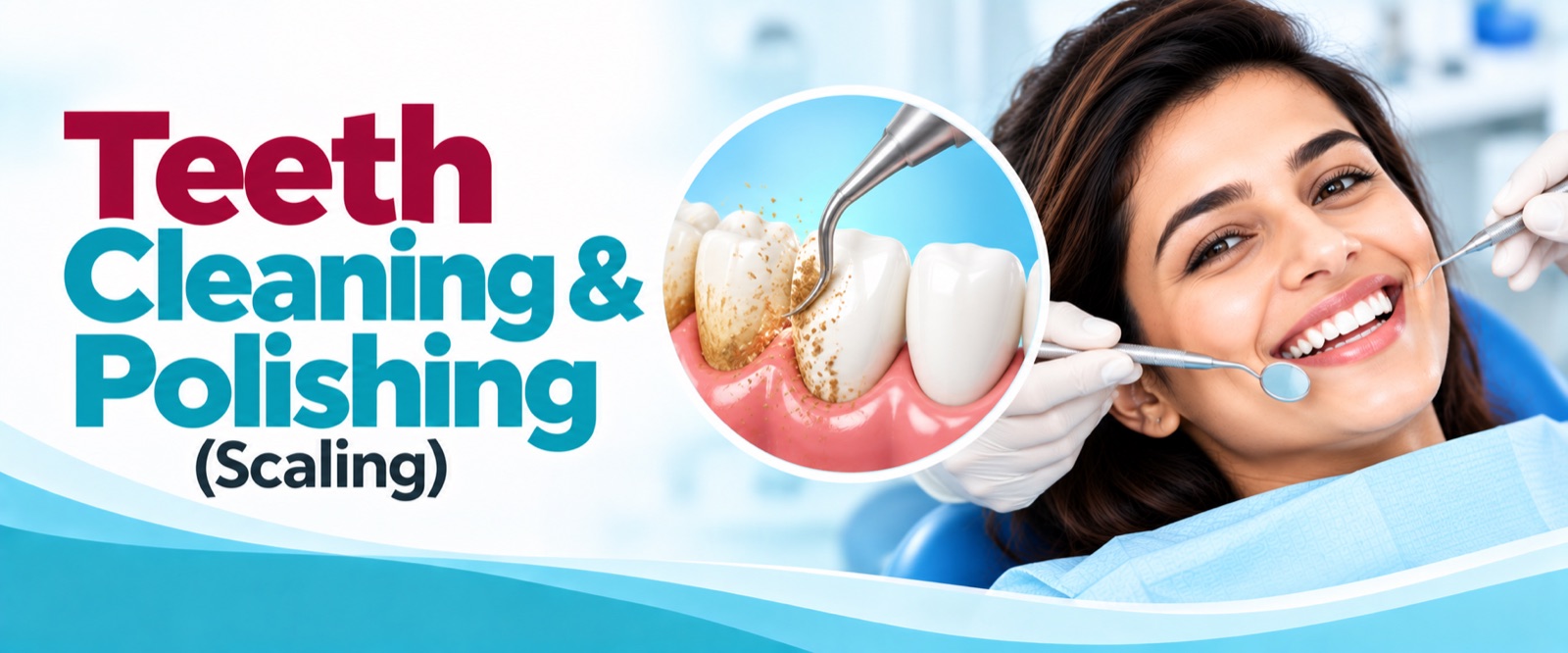
Woman in a dental chair beside a close-up of tartar being cleaned from the teeth with a scaling instrument
Routine hygiene visit

Scaling and polishing in Goregaon West & Malad East

Teeth cleaning, usually called scaling and polishing, is a routine visit where plaque, hardened tartar and surface stains are removed from your teeth and the surfaces are polished smooth. It keeps gums healthy and breath fresher, and it suits almost anyone who has teeth. Most people are advised to come about every six months, though your dentist may set a different gap.

★★★★★5.0 on Google from 124 patient reviews · Read what patients say

On this page

At a glance

Often under an hourDepends on the tartar build-up
About every six monthsSooner or later, depending on gums
Usually no injectionNumbing is for deeper gum cleaning
Stains lift, shade staysNatural tooth colour won't change
Understanding it

About this treatment

Plaque is a soft, sticky film of bacteria that forms on your teeth every day, and a decent toothbrush deals with most of it. What gets missed, mainly along the gumline and between teeth, hardens over time into tartar, also called calculus. Tartar is rough and porous and stays put like dried cement. Brushing harder won't shift it, and scraping at it with a pin or a fingernail only hurts the gum. Only a dentist's instruments can take it off, and that is the whole reason this visit exists, whatever your brushing habits.

Nothing hurts, so why bother? Because tartar keeps plaque pressed against the gums, and they respond by turning red, puffy and easy to bleed. That's gingivitis, or early gum inflammation, and at this stage a proper clean plus better home care usually reverses it completely. A clean also helps with much bad breath, since the bacteria behind the smell sit on tartar, on the tongue and between the teeth. If your breath stays unpleasant afterwards, do say so; sometimes the cause lies in the nose, throat or stomach rather than the mouth.

A routine clean deals with deposits on the tooth surfaces and just at the gum edge. If the gums have begun to pull away and pockets have formed, that's a different job: a deeper clean below the gumline, spread over one or more visits, covered on our gum care page. Dr. Mahesh will tell you which one applies once he has looked, and he won't push the bigger job if the smaller one will do. Naturally yellow teeth won't change after a clean either, and for that the conversation is about whitening and smile design.

Signs it's time to book

  • Your gums bleed in the sink when you brush or floss
  • A rough yellow or brown crust has built up at the gumline, often behind the lower front teeth
  • Your breath stays bad even after brushing and cleaning your tongue
  • Tea, coffee, tobacco, paan or gutkha have left brown stains
  • It has been a year or more since a professional clean
  • Your gums look swollen, shiny or dark red
Step by step

What happens in the chair

A quick look first

Before any instrument comes near your teeth, Dr. Mahesh checks the teeth and gums and asks about bleeding, sensitivity and health matters such as diabetes, heart conditions or pregnancy. Mention your medicines too, and say if you're pregnant. That chat decides how thorough the visit needs to be and whether anything else, like an X-ray, is called for before the cleaning starts.

Taking off the tartar

Scaling generally uses a vibrating tip, hand scalers or a mix of both, with water spray and suction to clear the loosened debris. You may hear a whirr or feel a ticklish buzzing against the tooth. It isn't meant to hurt, so raise your hand if it does, and particularly sensitive spots can be handled more gently or in short bursts.

Along and just under the gum

Tartar often sits right at the gum edge and a little way beneath it, and that is cleaned out carefully. Gums that were inflamed may bleed a bit, which is expected and settles as they heal. If the build-up goes deeper than a routine visit can handle, you'll be told plainly, and a separate deeper-cleaning visit is planned for another day.

Polishing

A soft rubber cup spins a gritty paste over each tooth, lifting the surface stains that tea, coffee and tobacco leave behind and smoothing the enamel. A smooth surface gives plaque less to cling to. Polishing doesn't remove enamel in any way that matters, and it won't change the natural shade of your teeth, however much it brightens them.

Advice before you go

You'll be shown where you're missing plaque, which brush and interdental tool suit the gaps between your teeth, and when to come back. Ask anything you like about what you saw. If your tongue has a coating, ask about cleaning it, since much bad breath starts there. Mild sensitivity or tender gums for a day or two afterwards is common, and you'll be told what to expect and what to watch for.

Your choices

Which cleaning do you need?

The regular visit

Routine scale and polish

For gums that are healthy or mildly inflamed. Plaque and tartar come off and stains are polished away. It's often finished in a single sitting, usually without an injection, and you leave with practical advice on keeping the gums settled between visits.

Tea, coffee and tobacco

Stain-focused polish

If brown surface staining is the main complaint, the polish gets extra attention. It lifts surface stain only, so discolouration lying deeper in the tooth needs a different conversation, such as whitening, which Dr. Mahesh can talk through.

When pockets have formed

Deeper gum cleaning

If the gums have pulled away and tartar sits well below them, a standard clean can't reach it. The root surfaces are cleaned under local anaesthetic, sometimes over two visits. Read more about gum treatment and what it involves for you.

Before and during treatment

Cleaning around braces

Brackets and wires trap plaque, so a clean before braces or aligners go on, and regular ones while you wear them, help prevent marks on the teeth and swollen gums. How often depends on your treatment plan and your gums.

Tartar comes back, and that's normal.Plaque re-forms daily and can harden again, so a clean resets the clock rather than stopping it. How fast it returns depends on your saliva, diet and how well you clean. Heavy build-up despite good brushing is worth mentioning, since it can point to a gum problem.
Straight answers

Cleaning myths, sorted

Myth

Brushing harder, or a strong mouthwash, removes tartar.

Fact

Fact: Hardened tartar can't be brushed or rinsed off, and scrubbing hard only damages gums and wears enamel. A water flosser can help clear plaque between visits but doesn't remove tartar. Use a soft brush, clean between teeth, and leave the hard deposits to the dentist.

Myth

You only need a clean when something hurts.

Fact

Fact: Early gum trouble and tartar rarely cause pain, so waiting for it means waiting until damage is done. Regular cleaning, usually about every six months, is preventive. It's much easier to reverse inflamed gums than to rebuild lost bone.

Myth

Scaling is only cosmetic.

Fact

Fact: Whiter-looking teeth are a pleasant side effect, but the real purpose is gum health. Removing the tartar lets inflamed gums settle and helps keep teeth in place for the long run, and the cleaner mouth usually smells fresher too.

After the clean and between visits

  • Teeth may feel sensitive to cold for a few days, and gums a little tender; a sensitive-teeth toothpaste often helps. If it lingers beyond a couple of weeks, contact us.
  • A little pink in the sink that day is common. Bleeding that carries on for more than a day or so, or is heavy, needs a call to the clinic.
  • Brush twice a day with a soft brush angled at the gumline. Two minutes, no scrubbing.
  • Clean between your teeth once a day with floss, or small interdental brushes if the gaps are wide.
  • Brush or gently scrape your tongue from back to front, since much bad breath starts there.
  • Rinse with water after chai or coffee. It won't undo a stain, but sugar and colour sit on the teeth for less time.
  • Don't scrape tartar off at home with pins, nails or scrapers. You'll hurt the gums and can scratch the enamel.
  • Book your next visit before you leave so it doesn't slide into a second year.
Visit us

Teeth cleaning near Goregaon West and Malad East

A routine clean fits into an ordinary weekday. The Goregaon West clinic, at 8/60, Navjyoti Society Road, off Mahatma Gandhi Road, Unnat Nagar 2, is open Monday to Saturday, 10 AM to 4 PM, so a mid-morning or early afternoon slot works if you can step out of work or home for a while. Walk-ins are welcome, and if you message us on WhatsApp first we can fit you in with less waiting.

If you'd rather come after work, the Malad East clinic at Shop No. A/4, Sunshine Co-op Housing Society, Subhash Lane, B. L. Murarka Marg, Shivaji Nagar, opens from 6 PM to 9 PM, Monday to Saturday, and is easy to reach from Malad West and Kandivali. There's nothing special to prepare: brush as usual, and tell us when booking if you have a heart condition, diabetes or are pregnant. Bring any recent dental reports or X-rays you have.

Goregaon WestMain clinic

8/60, Navjyoti Society Rd, off Mahatma Gandhi Road, Unnat Nagar 2, Goregaon West, Mumbai 400104

Mon–Sat · 10:00 AM – 4:00 PM

Get directions →

Malad EastEvening clinic

Shop No. A/4, Sunshine Co-operative Housing Society, Subhash Lane, Shri. B. L. Murarka Marg, Shivaji Nagar, Malad East, Mumbai 400097

Mon–Sat · 6:00 PM – 9:00 PM

Get directions →
Good to know

Teeth Cleaning & Polishing: questions patients ask

Before you book

How often should I get my teeth cleaned? +
For most people, about every six months, and some need it sooner. If you form tartar quickly, smoke or chew tobacco, have diabetes or have had gum disease, Dr. Mahesh may suggest three or four months. People with healthy gums and little build-up can sometimes stretch the gap, but that's a decision for a check-up, not a guess. Your gums at each visit tell the dentist what interval makes sense for you.
What is the difference between scaling, polishing and deep cleaning? +
Scaling removes plaque and tartar from the teeth, polishing smooths the surface and lifts stains, and together they make up the routine visit. A deep clean, often called root planing, is a separate and longer procedure for gum disease that cleans below the gumline and smooths the root surfaces, usually under local anaesthetic and sometimes over two visits. Dr. Mahesh will say which one you need after examining you, and our gum care page covers the deeper treatment.
Is it safe to have my teeth cleaned if I'm pregnant, diabetic or have a heart condition? +
Often yes, but tell the dentist beforehand so the visit can be planned around your health. Gums bleed and swell more easily in pregnancy, and diabetes or a heart condition may call for extra care. Decisions about timing or precautions are clinical ones that Dr. Mahesh makes with you and, where needed, your own doctor. It helps to bring a list of your medicines.

During the visit

Is teeth scaling painful? +
Not usually. Most people describe it as odd, ticklish or mildly uncomfortable rather than painful, and a routine clean doesn't need an injection. Sensitive teeth or inflamed gums can make it feel sharper. Tell us if something stings, because the dentist can go gently, pause, or numb a small area. For a deeper clean below the gumline, local anaesthetic is normally used.
How long does scaling take? +
A routine scale and polish is often done in one visit of roughly half an hour to an hour, depending on how much tartar there is. A short visit isn't automatically a poor one when there's little build-up, while a heavier mouth takes longer. If you're unsure what was done, ask; you're entitled to an explanation. Deeper cleaning takes longer and may be split across two visits.
Is it normal for my gums to bleed during scaling? +
Yes, if the gums are inflamed. Swollen gums bleed easily when touched, so some bleeding is expected and often eases within a day. Healthy gums bleed very little, which is why the amount tells the dentist something. Bleeding that carries on beyond a day or two, or gets worse over the following weeks, should be checked, and heavy bleeding that won't stop needs a call to us or urgent medical care.
Does scaling damage enamel or make teeth weak? +
No. Scaling takes deposits off the surface of the tooth, not the tooth itself, and polishing uses a soft rubber cup with a mild paste. Teeth with thin or poorly formed enamel can feel more sensitive afterwards, so mention it if you know yours do. What does weaken teeth is long-standing gum disease, which wears away the bone that holds them, and regular cleaning helps guard against it.

Afterwards

Why are my teeth sensitive after scaling, and how long will it last? +
Because tartar that covered parts of the tooth has gone, leaving surfaces that were protected exposed. Sensitivity to cold and tender gums for a few days is common, and a sensitive-teeth toothpaste often helps. After a deeper clean it can last a month or two before fading. If it hasn't improved after a couple of weeks, or the pain is sharp, get it looked at.
Does scaling loosen teeth or leave gaps? +
No, but it can make existing looseness and gaps easier to see. Tartar sometimes fills spaces and holds slightly loose teeth together, and swollen gums shrink once they're healthy, so you notice spaces that were hidden. The gaps weren't made by the cleaning; the gum disease behind them was. A tooth may feel a little looser for a while after a deeper clean. If it still feels loose weeks later, or is getting worse, have it examined.
Is there any risk of infection after a dental cleaning? +
Problems are uncommon, but not impossible, so it helps to know what to watch for. Our clinics run a sterilised, hygienic setup, which is the main protection. Tell the dentist beforehand about any heart condition or illness that lowers your resistance to infection. Afterwards, swelling that increases, fever, pus, or pain that gets worse instead of better are reasons to see a dentist the same day.

Breath, stains, cost and children

Will teeth cleaning get rid of bad breath? +
It helps when the cause is in the mouth, which it usually is. Bacteria on the tongue, between the teeth and in tartar under the gums produce most of the smell, so removing tartar and settling inflamed gums can make a real difference. Cleaning your tongue daily matters too. If your breath is still bad after a thorough clean and good home care, a doctor should check the nose, throat and stomach.
Can cleaning make my yellow teeth white again? +
It can make them look cleaner and brighter, but only where the yellow is surface stain. Tea, coffee, tobacco, paan and gutkha leave marks on the outside that polishing lifts. If the yellow is the tooth's natural shade, or comes from inside the tooth, a clean won't change it, and that's where whitening or smile design comes in. Dr. Mahesh can tell which you have after a look.
What decides the cost of teeth cleaning? +
How much tartar and staining there is, how long the work takes, and if you need a deeper clean below the gumline instead of a routine one. Any examination or X-rays needed beforehand also play a part. We don't quote a figure without seeing your teeth, so call or message us on WhatsApp and we'll tell you what applies to you after Dr. Mahesh has had a look.
Can children have their teeth cleaned? +
Yes, children are treated at both clinics, and a check-up with a clean can help catch cavities and gum trouble early. How much cleaning a child needs depends on their teeth and how well they brush. Our children's dentistry page explains what to expect, and you can book a slot that suits school hours.
Related treatments

You may also want to read

Due for a clean? Book a slot that fits your day.

Pick the daytime clinic in Goregaon West or the evening one in Malad East. Call or WhatsApp us and we'll find you a time with little waiting.

Call Now WhatsApp