2 clinics — Goregaon West & Malad East, Mumbai Open Mon–Sat
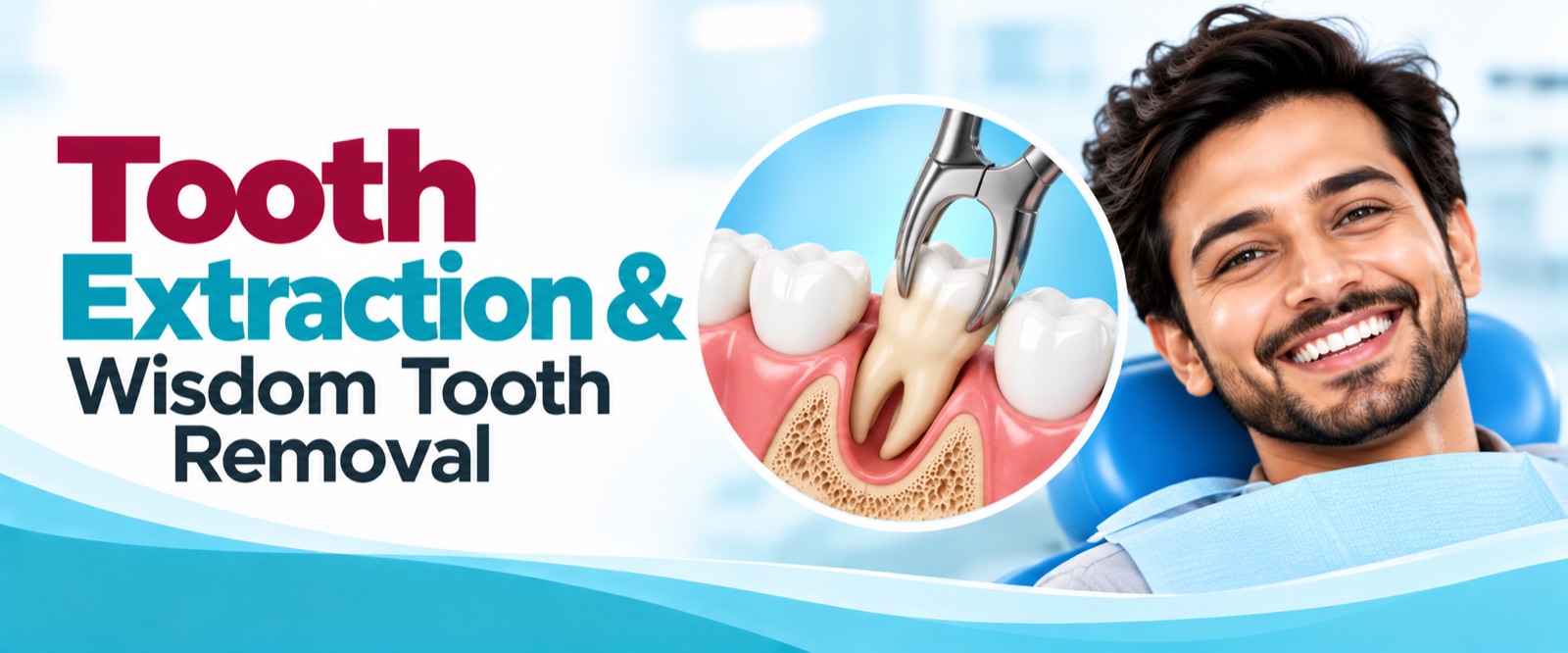
Smiling man in a dental chair beside an illustration of a tooth being removed with dental forceps
Removal, done calmly

Tooth and wisdom tooth removal, Goregaon West & Malad East

A tooth extraction is the removal of a tooth from its socket in the jawbone, done with the area numbed. It's advised when a tooth is too damaged to repair, badly infected, crowded or stuck beneath the gum, and wisdom teeth are the most common example. A tooth that's easy to reach can come out quickly, while a buried one takes longer.

★★★★★5.0 on Google from 124 patient reviews · Read what patients say

On this page

At a glance

Done with the area numbedYou feel pressure and movement, not sharpness
Simple or surgicalSurgical is for broken, buried or impacted teeth
Usually home the same dayMost cases are day-care, not a hospital stay
Soreness peaks earlyWorst in the first two days, easing over a week or two
Understanding it

About this treatment

The word 'extraction' sounds worse than the appointment usually is. What most people notice is pressure, then a sense of the tooth letting go, then gauze. The harder part tends to be the day after, which is why we spend as long on aftercare as on the removal itself. If you can arrange a quiet evening, soft food and an early night, the first day goes better. And where a tooth can still be saved, you'll hear that first, since a root canal and crown may be the better route.

Wisdom teeth are a separate conversation, because the question isn't whether they exist but whether they're causing trouble. Third molars that have come through cleanly and can be brushed are often just watched. The ones that get removed tend to be partly covered by gum and keep getting infected, tilted into the tooth in front, or decayed where no brush can reach. An X-ray decides. If you're about to start braces or aligners, mention it, because removal is occasionally part of that plan. He'll tell you what he sees before anything is booked.

What happens to the gap matters too. A missing molar left empty for years can let its neighbours lean in and the tooth opposite drift, which upsets the bite and makes cleaning harder. An implant is one way to fill it, a bridge another, and dentures a third. A wisdom tooth at the very back usually doesn't need replacing at all. Raise the subject at the same visit as the removal, since it's easier to plan while the tooth is still there, and gaps that are 'left for now' often stay that way for years.

When removal is commonly recommended

  • A tooth broken down to the gum line that can't hold a filling or crown
  • Decay or infection too deep for a root canal to rescue
  • A wisdom tooth that keeps getting swollen, infected or sore
  • A wisdom tooth pressing on, or decaying, the tooth in front
  • A tooth loosened by advanced gum disease
  • A tooth that has to go to make room before braces
Step by step

The appointment, from start to finish

A look and an X-ray

Dr. Mahesh examines the tooth and takes an X-ray to see the shape of the roots and how close they sit to the nerve in the lower jaw or the sinus above. He also asks about your health. Mention blood thinners, diabetes, blood pressure tablets, pregnancy or a recent illness, so the plan can be adjusted before the day.

Numbing

Local anaesthetic is given, and the dentist checks that the area is properly numb before starting. You might want to close your eyes. If you need a pause, lift a hand and it's respected. A few extra minutes of waiting at this stage often saves discomfort later, so tell Dr. Mahesh if the numbness hasn't reached the tooth and more can be given.

Loosening and lifting

The tooth is gently rocked to widen the socket and lifted out. You'll feel pressure and may hear a crunch, none of which should hurt, and if you feel anything sharp, say so and more numbing will be added. A broken or buried tooth may need a small cut in the gum and a stitch or two, which is what 'surgical' means here. It usually doesn't mean a hospital.

Gauze and the clot

You bite on clean gauze while a blood clot forms in the socket. That clot is the foundation of healing, which is why the next couple of days are mostly about leaving the area alone. Gauze needs firm pressure for at least about ten minutes, and more if bleeding continues. Keep your head up and talk as little as you can for the first hour.

Instructions before you leave

You're told what to eat, what to avoid, which medicines to take and which signs are worth a phone call. If you'll be left with a gap, we'll discuss whether it needs filling and roughly when, so it isn't forgotten once the soreness is over. Ask anything on your mind, because it's easier to explain then than over the phone later.

Your choices

Types of removal

A visible, firm tooth

Simple extraction

The tooth is loosened and lifted out without cutting the gum. It's usually quick, and recovery is typically gentle, with soreness for a day or two. This suits teeth that are fully visible and have firm, straight roots.

Broken or buried teeth

Surgical extraction

When a tooth has snapped, has curved roots or hasn't come through, a small opening in the gum gives access. A stitch may be placed, and the site heals like any other socket, though it needs a little more care for a few days afterwards.

Third molars

Wisdom tooth removal

Planned from an X-ray, because lower wisdom teeth sit near a nerve and upper ones near the sinus. Dr. Mahesh explains what he sees on the film and what recovery will probably feel like in your case, before you agree.

Milk teeth

Children's teeth

Infected or stuck baby teeth can be removed when that's the better choice, so the adult tooth can come through properly. Our kids dentistry page describes how younger patients are looked after, including how treatment is explained to them.

Don't wait out bleeding that won't stop, pain that grows after day two or three, or swelling with a fever.Pain that builds after the first couple of days, especially with a bad taste, can be a dry socket, which a dentist can treat. Water coming out of your nose after an upper back tooth has been removed also needs a check.
Straight answers

Extraction myths, checked

Myth

Taking out an upper tooth harms your eyesight.

Fact

Fact: There's no established link between removing upper teeth and vision, and dentists remove them routinely. If you ever notice a change in your sight after any procedure, see a doctor, but the tooth itself isn't the cause.

Myth

Wisdom tooth surgery means a hospital stay.

Fact

Fact: It's usually a day-care procedure with the area numbed, and most people go home afterwards. A few complicated cases are planned differently, and if yours is one of them you'd be told well before the day.

Myth

A white or yellow patch in the socket always means infection.

Fact

Fact: Often it's simply healing tissue forming over the socket, and it can look pale or yellowish for some days. What deserves a call is severe pain, a bad taste or smell, visible bone, or pain that is climbing instead of fading.

The first week, in order

  • First hour: bite firmly on the gauze and keep still; if it soaks through, fold fresh gauze and bite again.
  • Leave the socket alone, with no poking by tongue, fingers or toothpick.
  • For the first day, skip straws, spitting and hard rinsing, which can pull the clot away.
  • Use a cold pack on the cheek in short spells on day one; a warm cloth can ease a stiff jaw later.
  • Eat cool, soft food such as curd rice, dal or khichdi on the other side, and avoid hot tea, spicy dishes and alcohol.
  • Stay off cigarettes, bidis, gutka and paan, which slow healing and raise the risk of a painful socket.
  • From the next day, rinse gently with warm salt water after meals, letting the water fall out.
  • Sleep with your head a little raised the first night, and call us if pain, bleeding or swelling gets worse.
Visit us

Extractions and wisdom tooth removal near Unnat Nagar and Shivaji Nagar

Because you'll want to go home and rest afterwards, many people book wisdom tooth removal for the earlier part of the day. The Goregaon West clinic is on Navjyoti Society Road, off Mahatma Gandhi Road in Unnat Nagar 2, and is open Monday to Saturday from 10 AM to 4 PM. It's an easy trip from Goregaon East or Jogeshwari. Eat something light beforehand, since you won't feel like chewing for a few hours.

An evening appointment at the Malad East clinic, open Monday to Saturday from 6 to 9 PM in Sunshine Co-op Housing Society, Subhash Lane, off B. L. Murarka Marg in Shivaji Nagar, means the numbness wears off at home. Malad West is close. If you're anxious, bring someone with you. You can drop in at either clinic, though booking by call or WhatsApp spares you the queue. Bring old X-rays and a full medicine list, especially blood thinners.

Goregaon WestMain clinic

8/60, Navjyoti Society Rd, off Mahatma Gandhi Road, Unnat Nagar 2, Goregaon West, Mumbai 400104

Mon–Sat · 10:00 AM – 4:00 PM

Get directions →

Malad EastEvening clinic

Shop No. A/4, Sunshine Co-operative Housing Society, Subhash Lane, Shri. B. L. Murarka Marg, Shivaji Nagar, Malad East, Mumbai 400097

Mon–Sat · 6:00 PM – 9:00 PM

Get directions →
Good to know

Tooth Extraction: questions patients ask

Before the day

How long does a tooth extraction take, and how long is the recovery? +
A simple extraction can be over in a few minutes of actual removal, plus time for numbing. A buried or broken tooth takes longer, and a wisdom tooth removal is often done in under about 40 minutes. Most people go home the same day and are back to normal activity within a day or two, with a few days off for difficult cases. Soreness and swelling then ease over the following week or two.
Do I need to get my wisdom teeth removed, and do all four have to come out? +
No, not necessarily, and not all of them. Wisdom teeth that have come through fully, can be cleaned and aren't causing trouble are usually just watched. Removal is advised for teeth that are repeatedly infected, decayed, damaging the tooth in front, or part of braces planning. An examination and X-ray tell Dr. Mahesh which group yours belong to, and it may be only one tooth.
Is there an alternative to surgery for a painful wisdom tooth? +
For a short while, sometimes. If the tooth is partly covered by gum and inflamed, careful cleaning, antiseptic rinses and, where there's infection, antibiotics can calm it down. If the same tooth keeps flaring up, removal is usually what settles it. A dentist needs to examine it, because the right short-term step depends on what's wrong. Don't just keep taking painkillers and hope.
Is extraction safe if I have diabetes, high blood pressure or take blood thinners? +
Often yes, with some planning. Diabetes, blood pressure, heart conditions, blood thinners, pregnancy and a recent illness can all change how or when an extraction is done. Bring your medicine list, recent reports and any advice from your physician, and never stop a prescribed medicine on your own before the visit. Dr. Mahesh goes through all of this at the start, instead of giving a blanket yes or no.

The day itself and the days after

Is wisdom tooth removal painful, and how much pain should I expect? +
The removal is done with the area numbed, so it should feel like pressure and tugging. Afterwards, soreness and swelling are common, usually peaking in the first couple of days, and your jaw may feel stiff. Paracetamol or ibuprofen, as advised, generally manages it. If the pain is growing around day two or three instead of fading, that's the point to call the clinic.
What can I eat after a tooth extraction? +
Soft or liquid food for the first day or two, such as curd rice, dal, khichdi, lukewarm soup or mashed banana. Wait for the numbness to wear off before eating so you don't bite your lip. Avoid hot drinks, spicy and crunchy food, alcohol and smoking in the early days, and chew on the opposite side. Return to normal food gradually as it feels comfortable.
Can I rinse with salt water, spit, sneeze or suck on the area after an extraction? +
Don't rinse hard, spit or suck on the area during the first day, since that can dislodge the clot. After that, gentle warm salt-water rinses, letting the water fall out, help keep the socket clean. If you need to sneeze, do it with your mouth open. Keep your tongue and fingers away. If your dentist gave you different timings, follow those instead.
Is it normal to still be in pain one day after an extraction? +
Yes. Soreness the next day is expected, and it may feel at its worst on that first night. It should then ease a little each day. Pain that grows around day two or three, rather than fading, deserves a check, because it can be a dry socket or an infection and both are treatable when caught early.

When something doesn't feel right

What is a dry socket, and how do I know if I have one? +
A dry socket happens when the blood clot is lost or never forms, leaving bone in the socket exposed. The typical picture is pain that gets worse some days after the removal, often with a bad taste or smell, and painkillers that barely help. It isn't dangerous in itself but it's very uncomfortable, and a dentist can treat it. Smoking, straws and hard rinsing early on raise the risk.
Is jaw and ear pain after wisdom tooth removal normal? +
A stiff, sore jaw for up to a week or two is common. Pain can also be felt in the ear on the same side, because the nerves in that area overlap. If the pain is getting worse rather than better, or comes with a bad taste, swelling or a fever, have it checked, since dry socket pain can spread towards the ear.
Water comes out of my nose after an upper tooth was removed. Is that serious? +
It needs to be looked at. The roots of the upper back teeth sit close to the sinus, and now and then an opening forms between the mouth and the sinus. Avoid blowing your nose hard or rinsing forcefully, and see your dentist soon so it can be examined and, if needed, treated. It isn't something to leave and hope it closes.
Why do I feel sick or keep tasting blood after an extraction? +
Swallowed blood can make you nauseous, and a pink tinge in the saliva during the first day is common. Continuous or heavy bleeding isn't. Bite firmly on clean, folded gauze for about ten minutes without checking it. If bleeding still hasn't stopped, or you can't stop vomiting, call the clinic or seek medical help.

Gaps, braces and cost

Do I need to replace a tooth after it's extracted, and how soon? +
A gap at the front, or where you chew, is usually worth replacing, because neighbouring teeth can lean in and the tooth opposite can drift, which upsets the bite and traps food. Choices include an implant, a bridge or a denture, and Dr. Mahesh can talk through them at your visit. A wisdom tooth at the very back generally doesn't need replacing. Timing depends on how the socket heals.
Can I have braces if my wisdom teeth haven't come through? +
Usually yes. Wisdom teeth that haven't erupted don't stop braces, but your dentist may want to keep an eye on them with an X-ray and sometimes suggests removal as part of the plan. Ask about it at your braces consultation instead of assuming either way.
What decides the cost of a tooth or wisdom tooth extraction? +
Whether it's simple or surgical, the position of the tooth, the X-rays needed, how many teeth are involved and any follow-up visits. A buried wisdom tooth differs a lot from a loose front tooth, so figures only make sense after an examination. Message us on WhatsApp or call to arrange a visit, and you'll get a clear estimate.
Related treatments

You may also want to read

A tooth or wisdom tooth giving trouble? Get it assessed first.

Book at Goregaon West in the daytime or Malad East in the evening. Dr. Mahesh will look at the X-ray and explain your choices before anything is done.

Call Now WhatsApp